A Third Person Traversal Experience
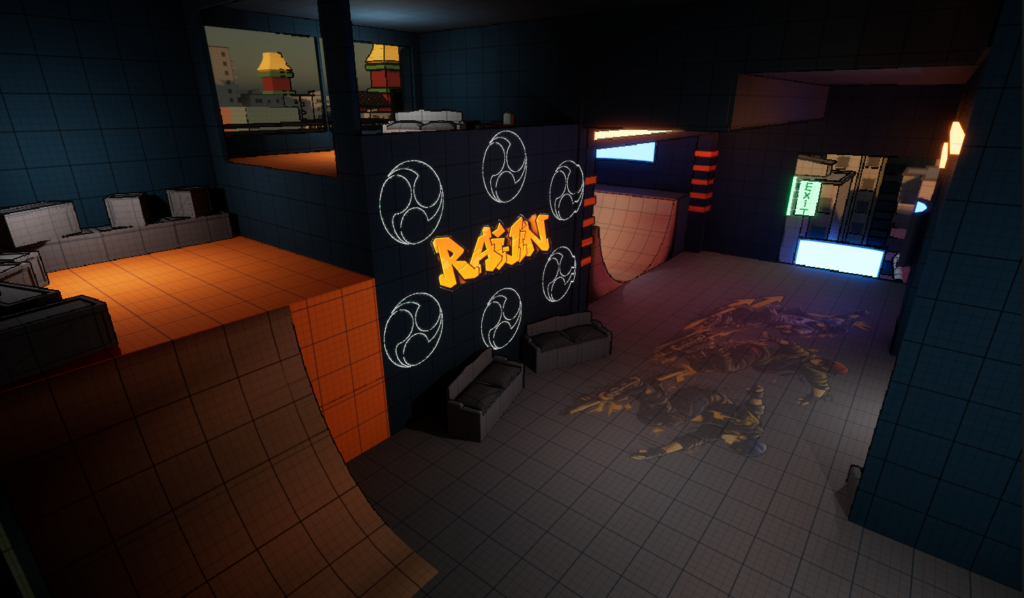
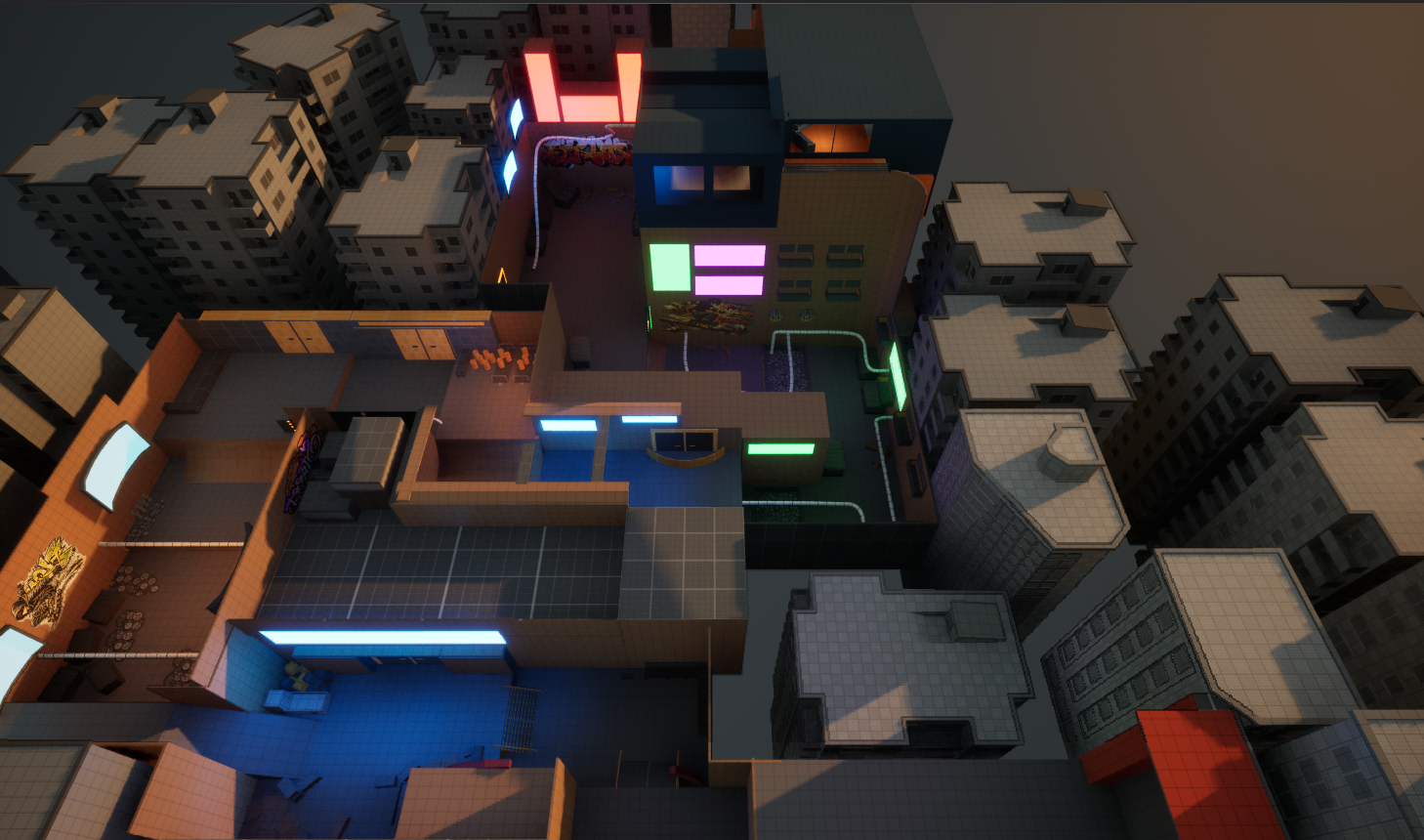
With this level I wanted to challenge myself by creating a third person traversal level that takes much inspiration from Bomb Rush Cyberfunk and Jet Set Radio. My goal was to create a linear experience with focus on flow and traversal.
With my own created rail system, I wanted to create a level that could give the player a sense of flow state whilst still being able to freely choose to explore a different path that they can switch to
ACT 1
For this project, it has primarily been Bomb Rush Cyberfunk and Jet Set Radio that has acted as my source of inspiration. My aim was to create a level that would support the main gameplay elements such as grinding and wall sliding with the outcome of giving the player a sense of flow.
In contrast to Bomb Rush and Jet Set Radio I wanted to make the player environment more closed off and linear. This still gives the player flexibility whilst traversing through the level with the different gameplay elements.

The iteration process has been significant and has come with robust swings. I have iterated a great deal on the level and dealt with numerous bugs.
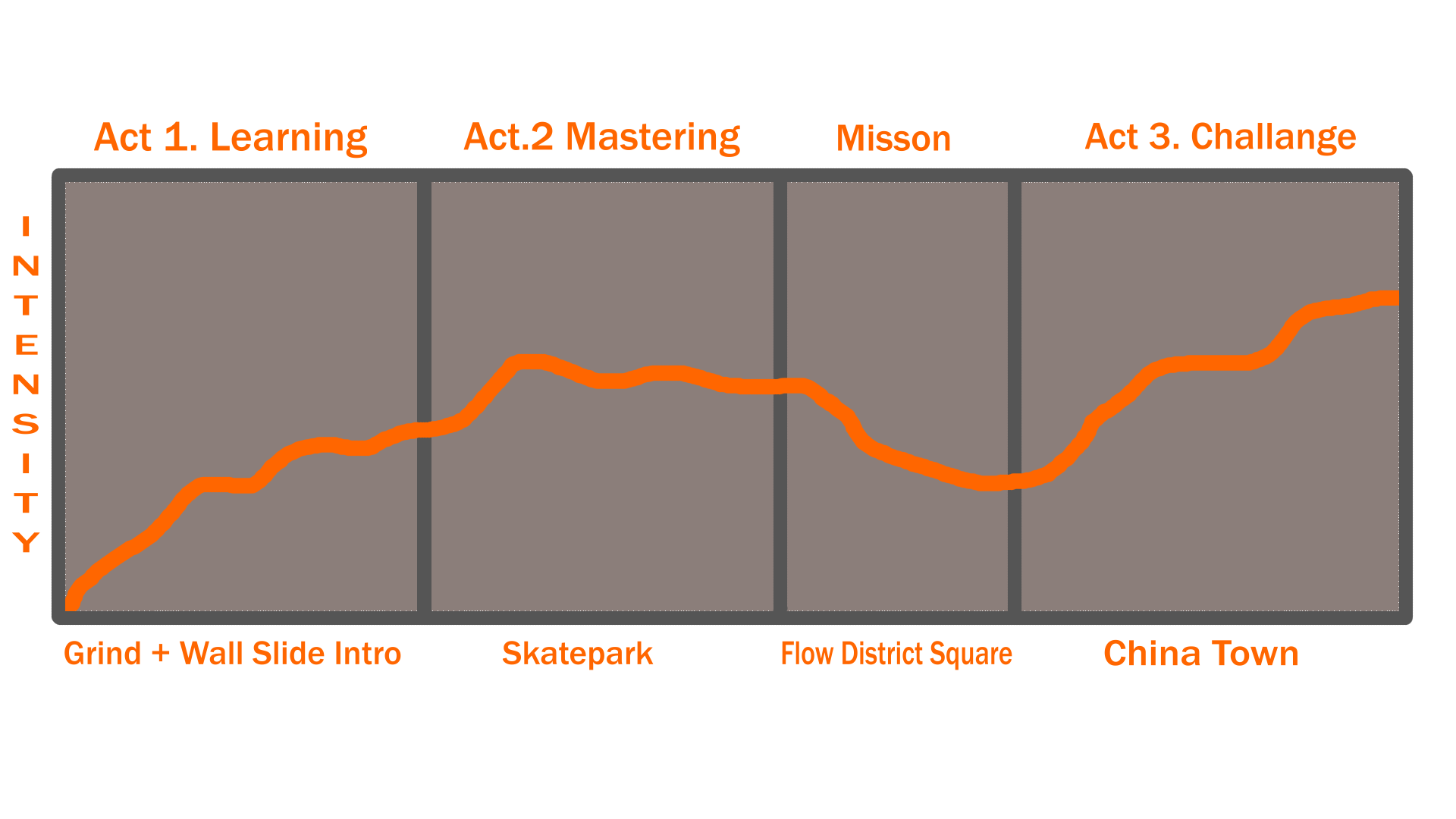
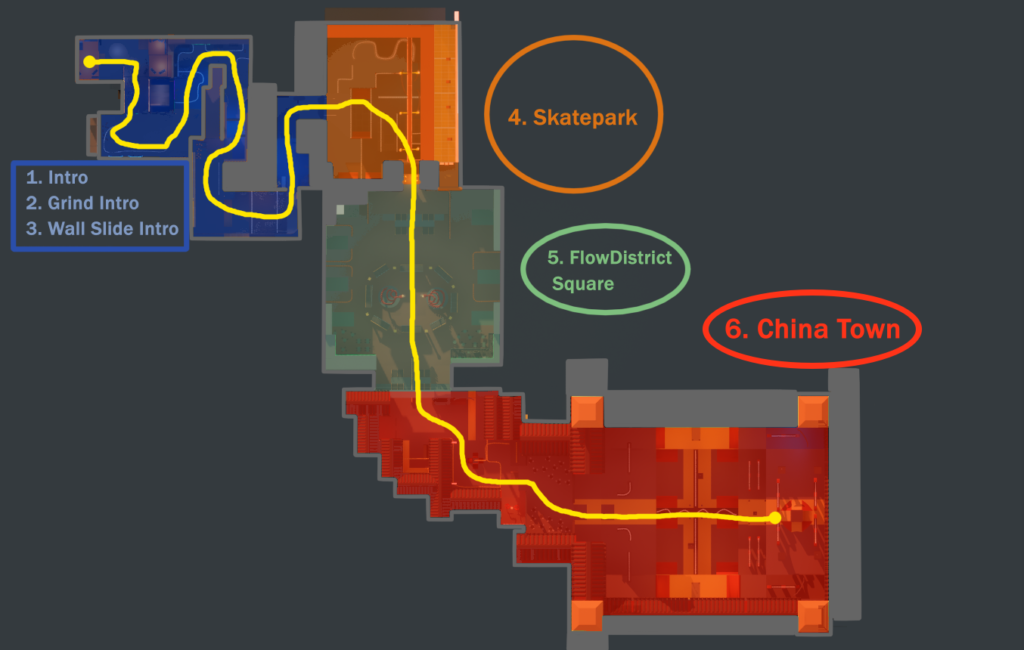
Early in the development phase, I mainly wanted to get the player path completed. I then used Kishotenketsu to create a natural level structre which helped me divide my level into different spaces with different focus areas.
The iteration process was driven by a mix of playtesting and my own design exploration. It remained agile and iterative and I was open to bold changes in service of the level’s overall quality. One example was a larger final area I had planned early on. However when it no longer supported the design goals or scope, I chose to cut it and rework the space into something more alinged with the inteded experience and production constraints.
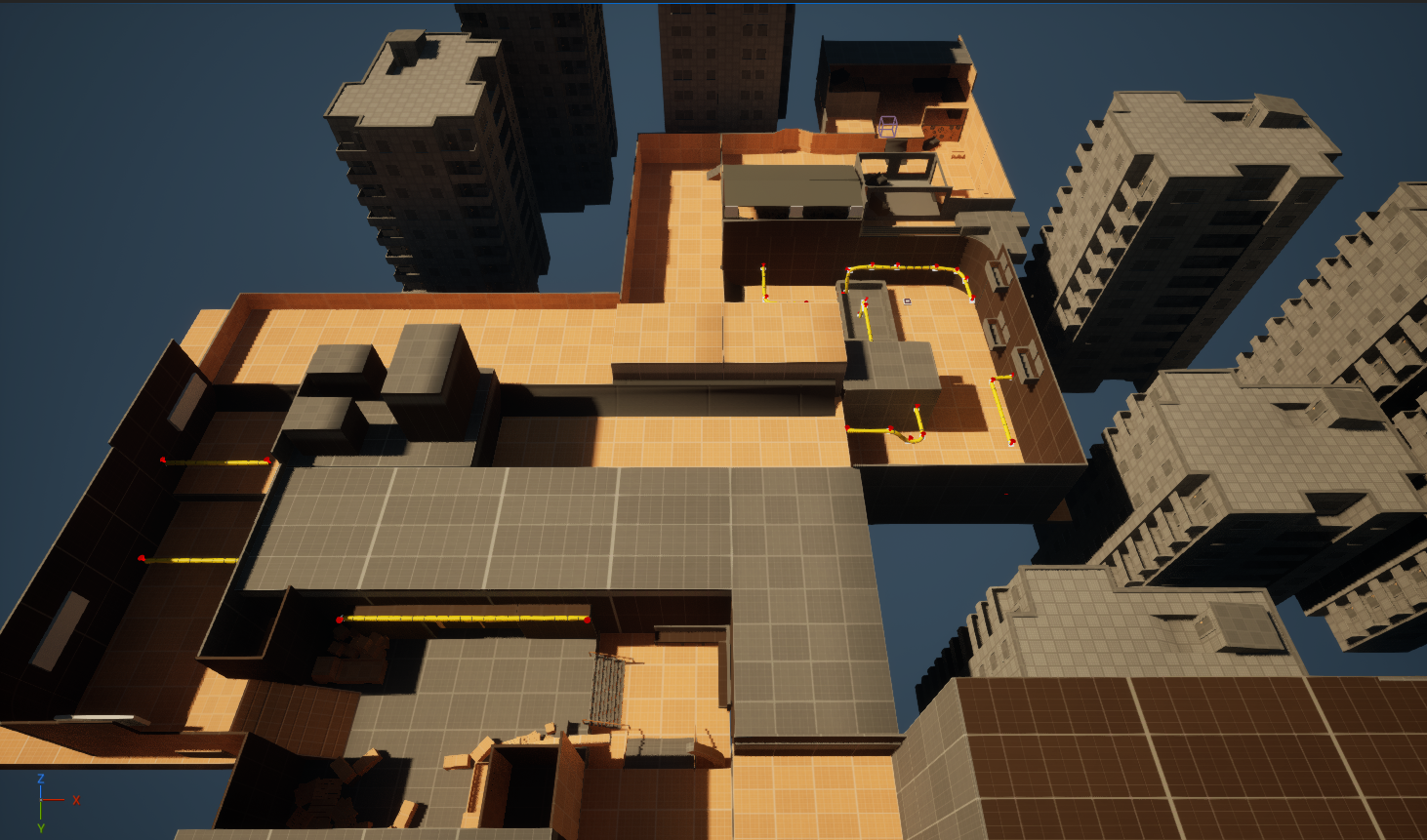
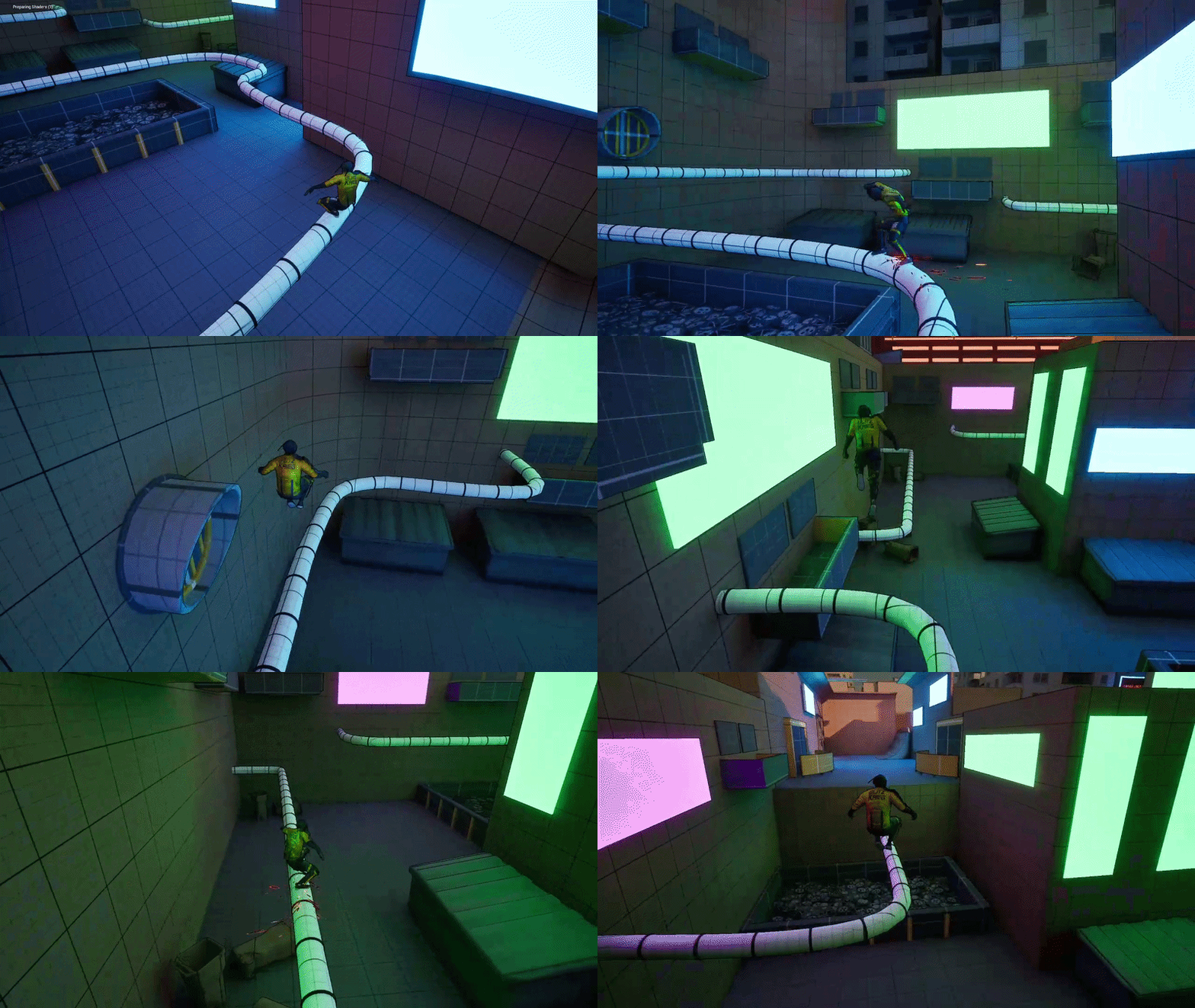
One of the main goals for the level design was to explore how the grinding mechanic could be used to create a specific type traversal and flow gameplay. The core of the grinding functionality was implemented in a previous project and has been iterated on later in this project.
For this level, I continuned iterating and polishing it further so it would feel reliable and responsive enough to support the gameplay the level was built around. With the blueprint being a spline mesh I had lots of ways to make going from point A to B more unique and entertaining.
ACT 2
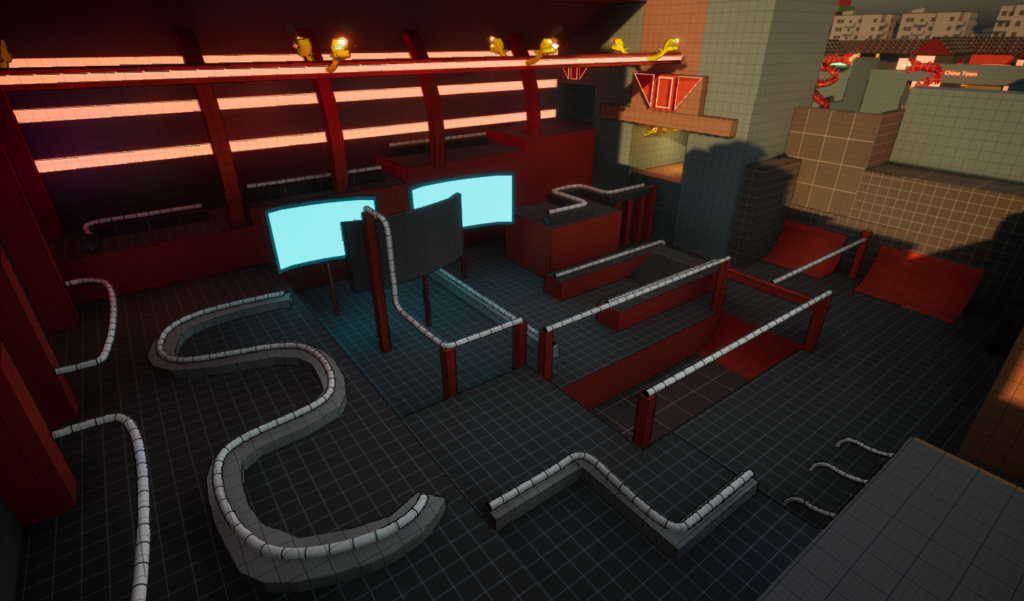
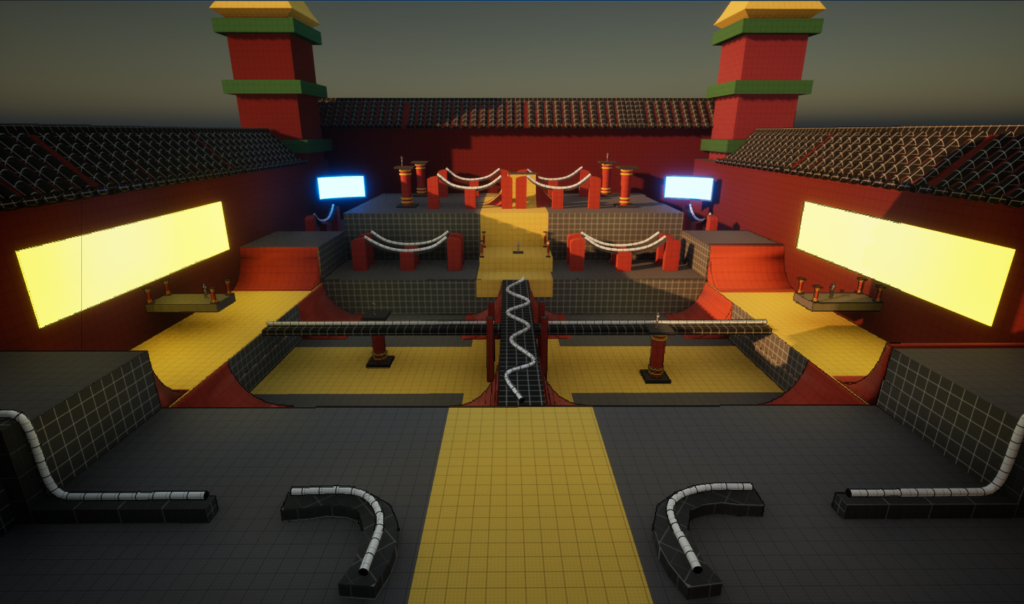
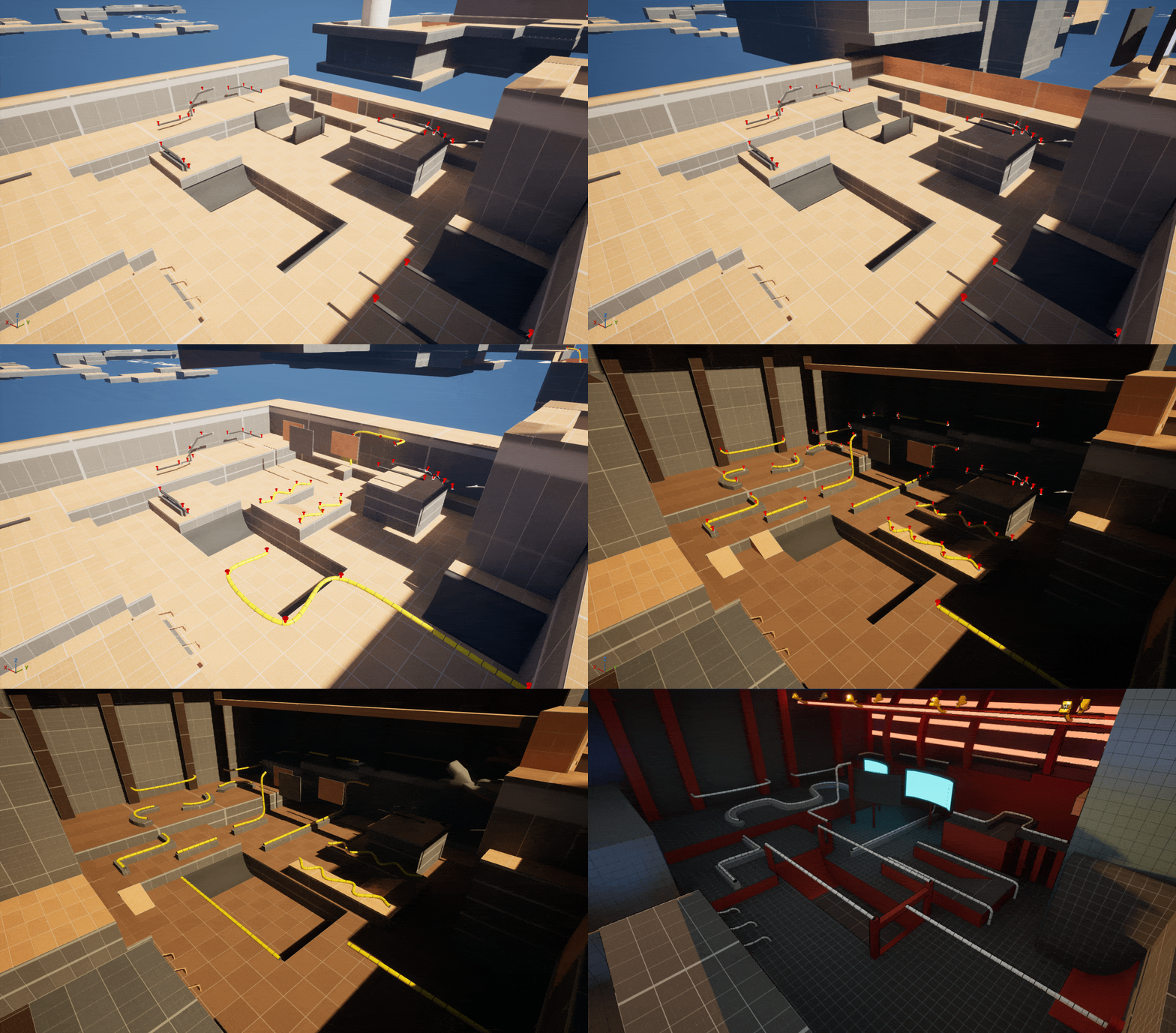
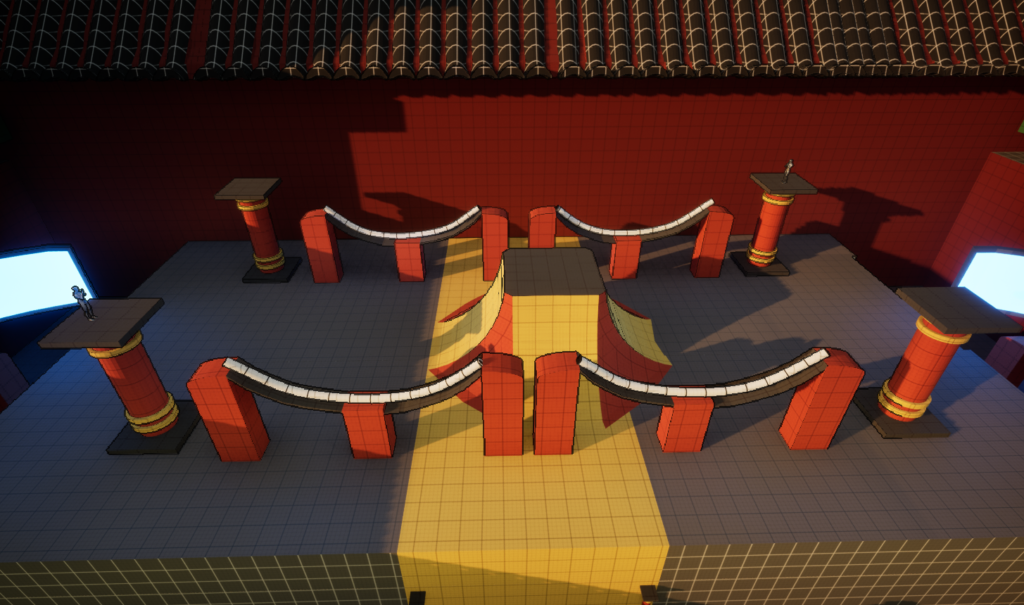
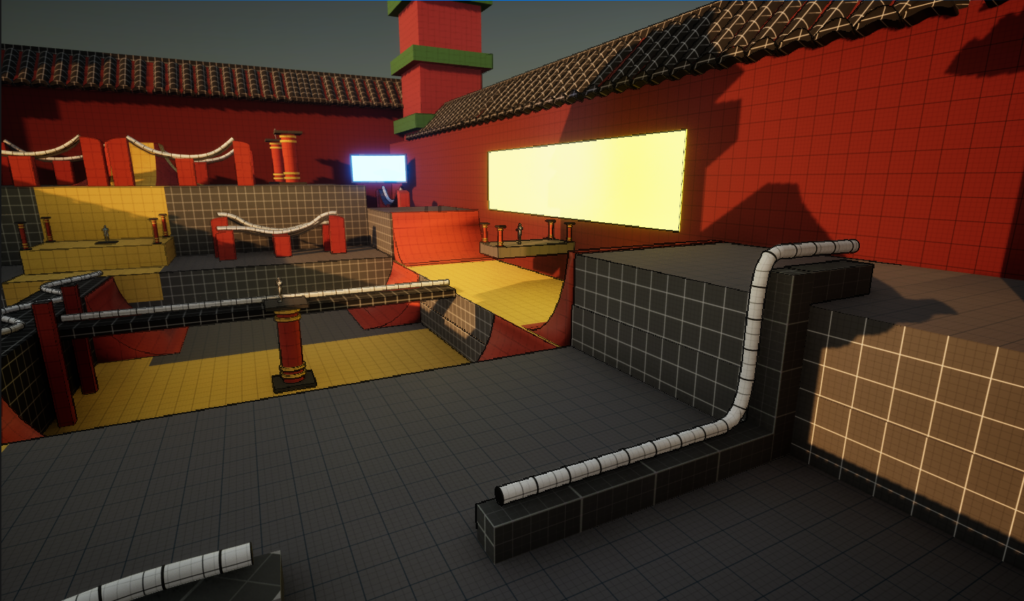
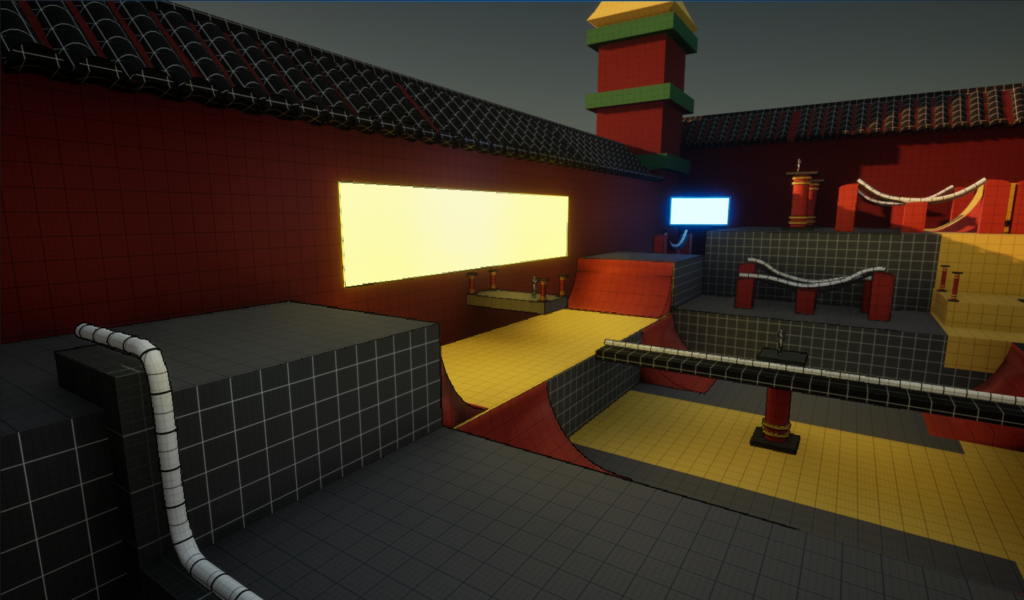
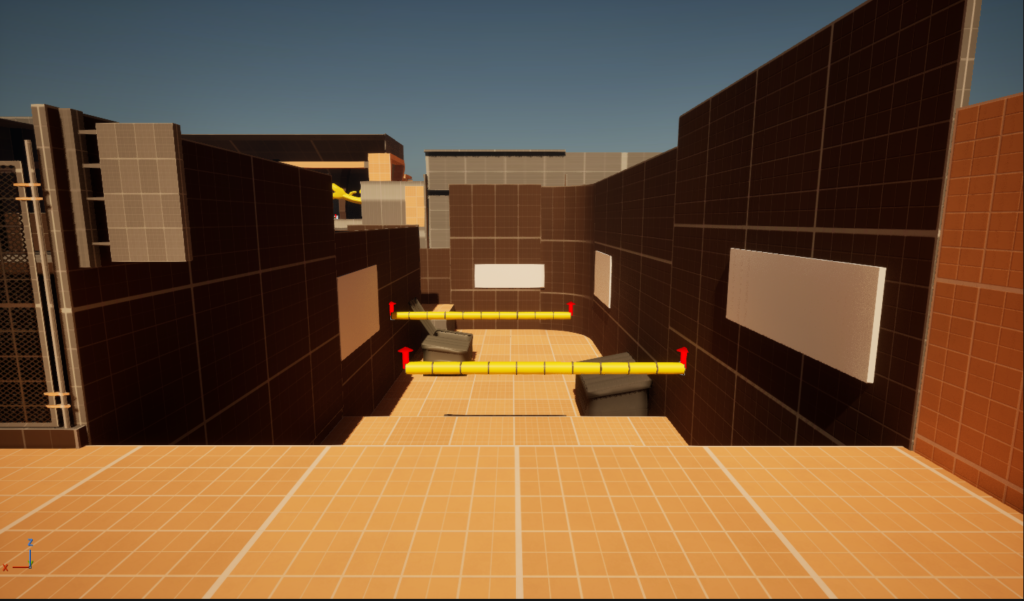
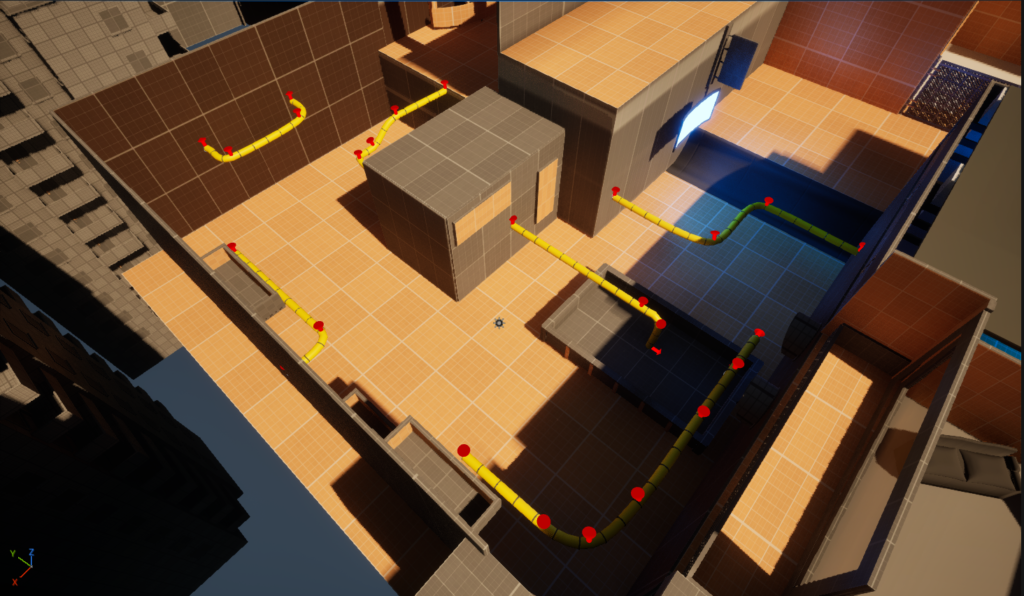
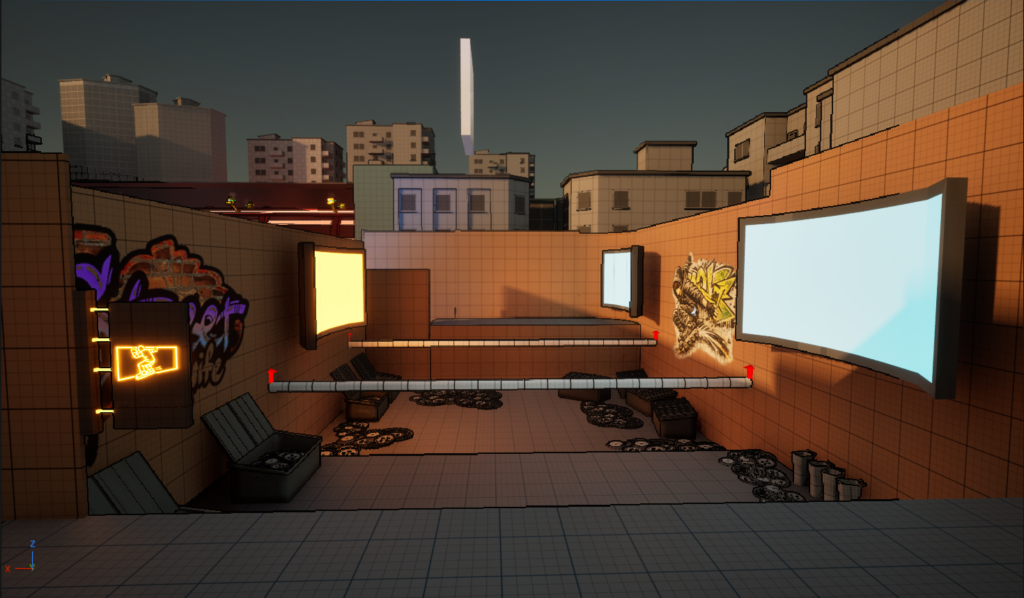
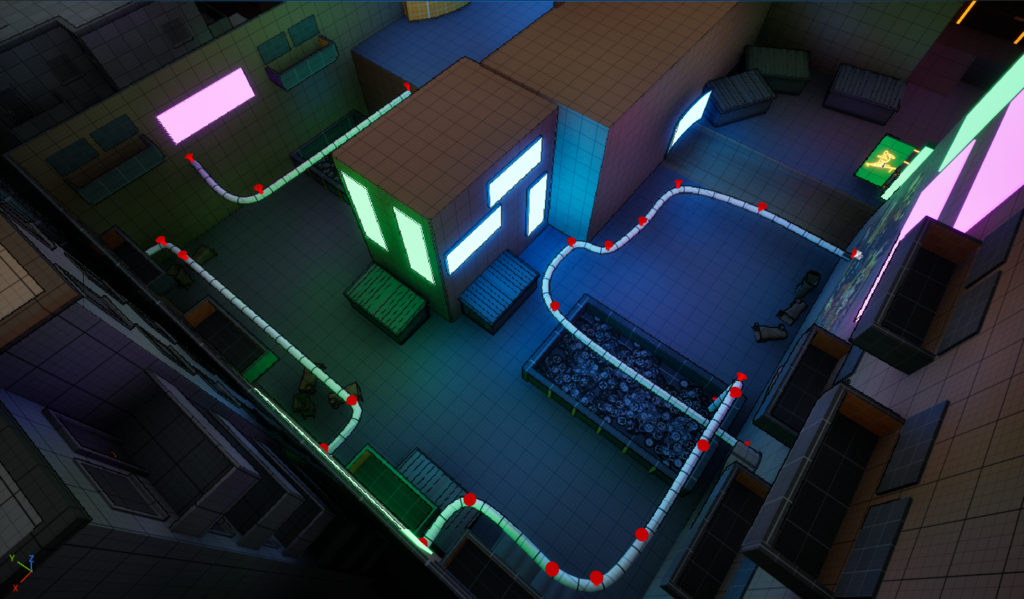
One challenge during development was balancing how long players stayed on rails throughout the level, which required continuous iteration. I wanted to avoid long, unchallenging rails that simply moved players from point A to B. To address this, I designed the skatepark as an open space with one clear exit and a more subtle alternative.
This allowed for multiple ways to exit the area. There are up to three interconnected routes giving players the freedom to explore different ways forward, follow a more defined path, or switch routes and approach it more freestyle
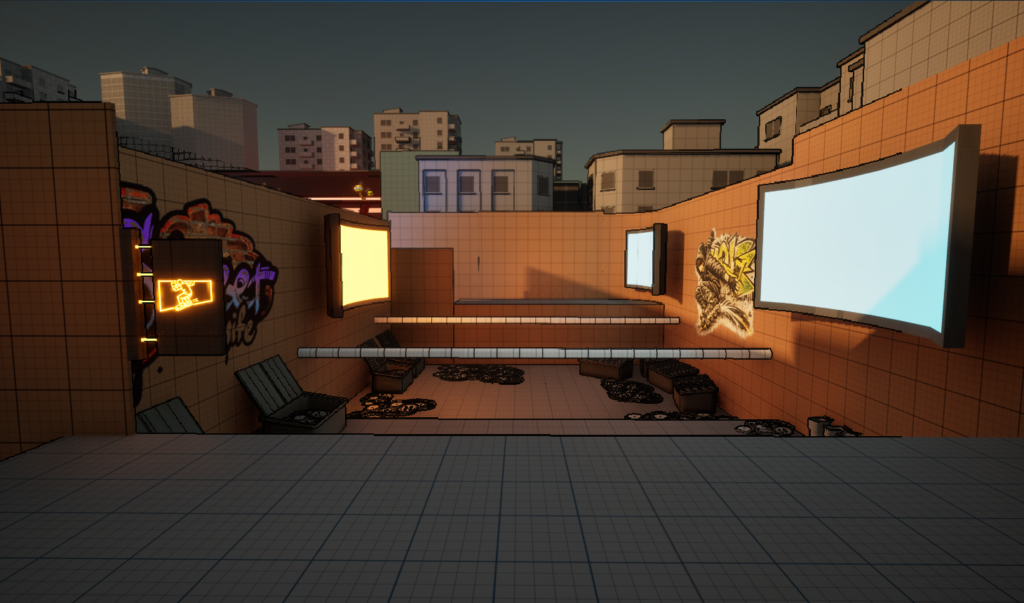
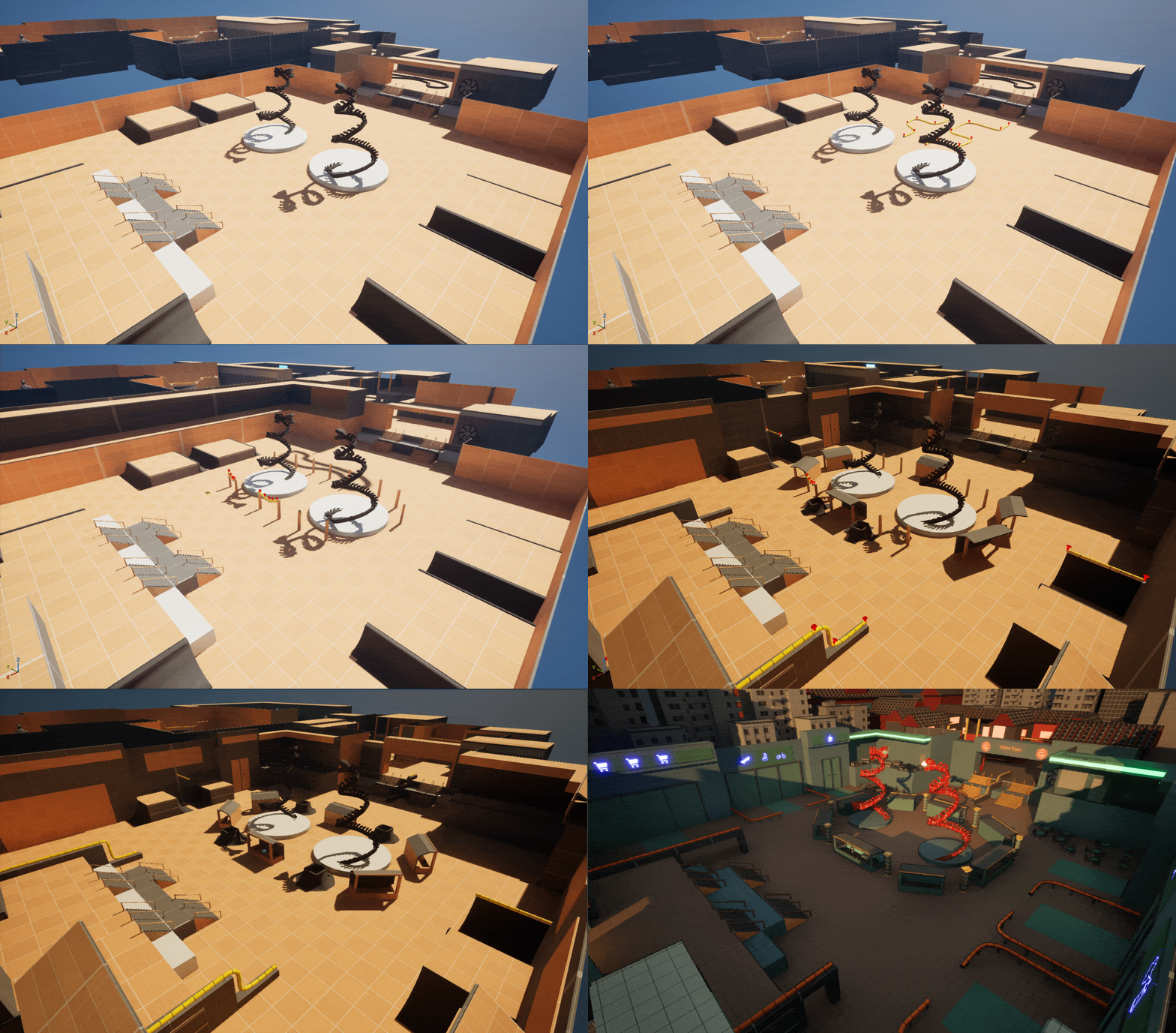
I chose to design this new area as a decompressing zone in order to slow down the experience. I made this choice because of the risk that the player might experience gameplay fatigue due to the preceeding area being very gameplay heavy with lots of grinding, jumping, and wall sliding.
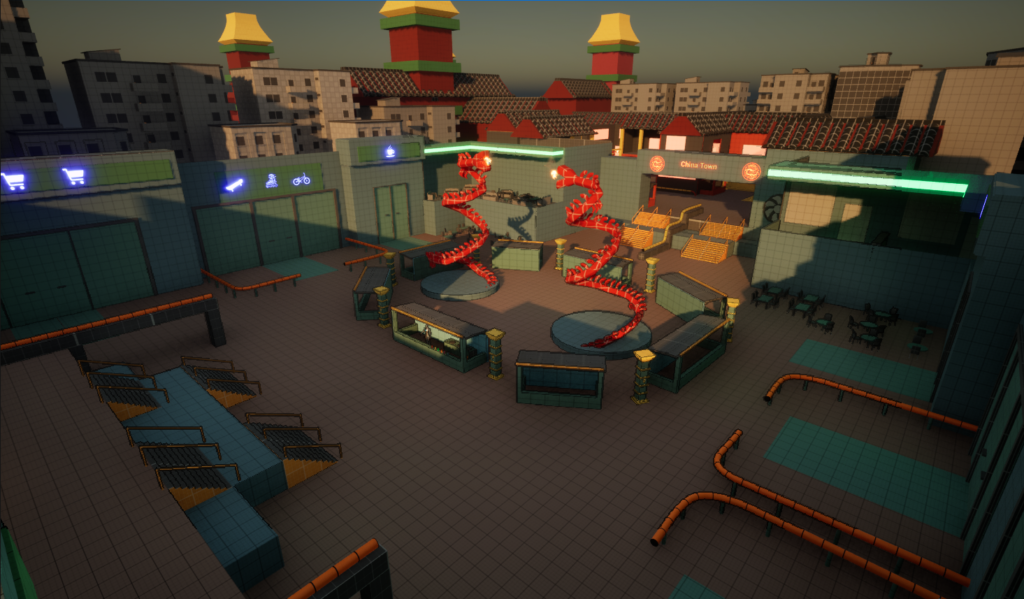
I wanted the player to decompress and take in the town square whilst still having a few options of fun where the player can ride grind rails and test out grinding on a dragon.
ACT 3
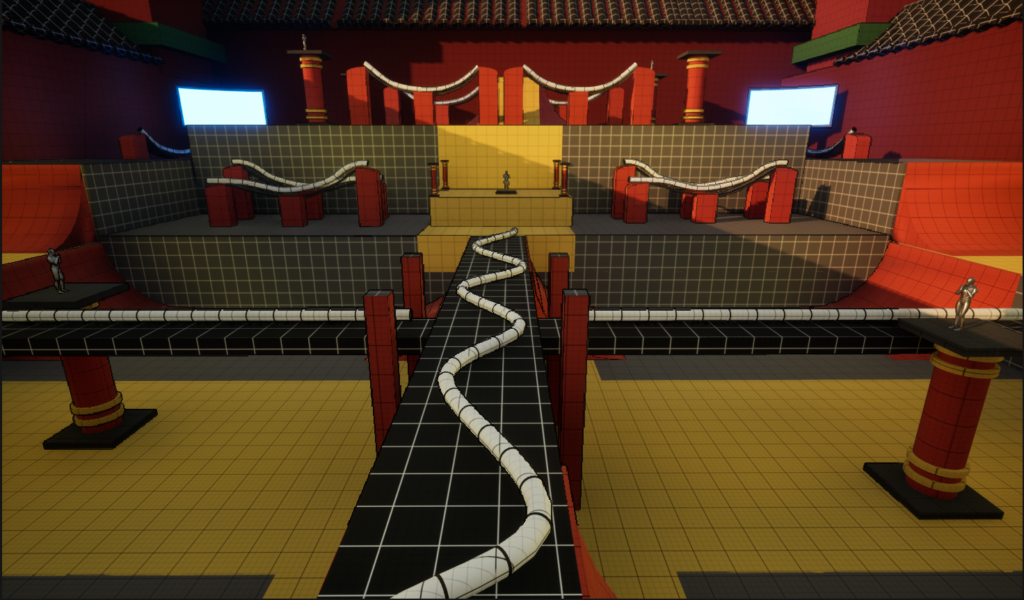
This area was designed to be a final challenge for the player, where the they combine the mechanics they have learned and apply them to enemies . It was designed with the intention of letting the player utilize the mechanics whilst using very simple combat in form of a bat swing to the stationary enemies shooting ranged projectiles which the player tries to evade using the traversal mechanics that can be used throughout the area.
Like the skatepark, the area isn’t built around a single direct path but allows players to switch between alternate routes while moving. However based on game tests, I reduced the number of these alternatives to avoid overwhelming the player with information. Instead, I designed three main approaches, left, middle, and right, that connect to each other. The enemies are also positioned to maintain the player’s movement and flow rather than interrupt it when approaching them.
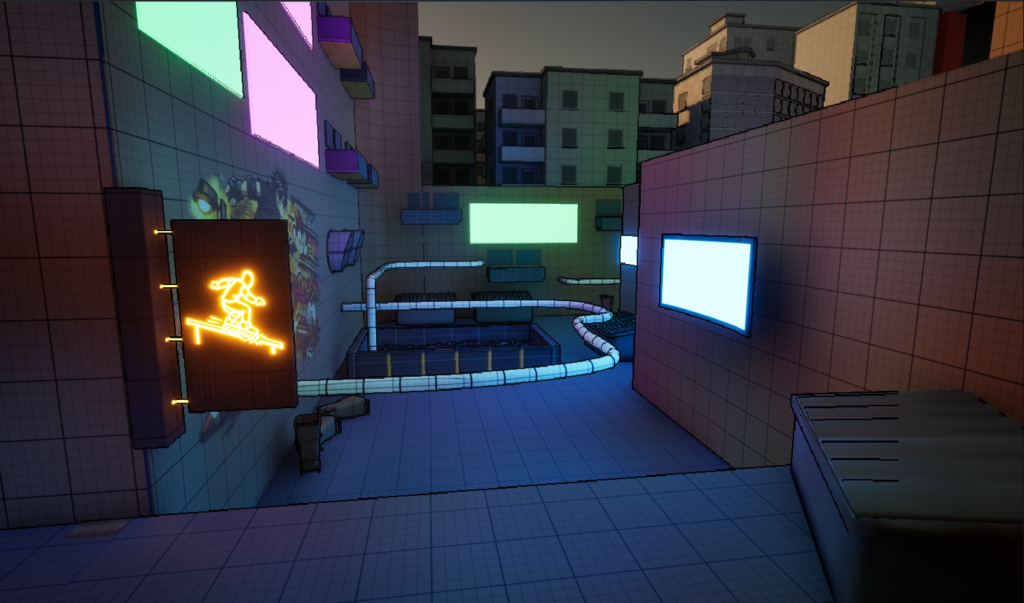
Feedback I received from playtests, along with my own observations, showed that players were unsure that they were in a tutorial area during the introduction of the grinding and wall slide mechanics.
The pacing and balance of these introductions were not effective. This led me to identify two key issues to address. First, I needed to better define the identity of the space so players would clearly recognize it as a tutorial area upon arrival. Second, I needed to improve the difficulty balance to help players clearly understand and learn the mechanics they would later need.
Using techniques like signposting, color contrast, and composition to improve navigation and reinforce the feeling of a tutorial area. I also adjusted difficulty by reducing the number of rails, extending their length and making wall slide surfaces more readable and inviting. To elevate the overall gameplay and feel of the level, I introduced varied rail elevations, allowing players to grind between different heights, while reducing ground-level rails to maintain a balanced experience
This project has been incredibly insightful and probably the most enjoyable project that I have worked on, and I am proud of the accomplishments I have had with creating this project. However it has also been a very challenging project that has pushed me into unfamiliar territory and has made me more comfortable with the agile workflow.
Everything does not always go the way you planned it, this is something that became much more clear during this project. That said, I saw this as an opportunity for me to sharpen my ability to adapt.
The set timeframe and structured plan were educational, but toward the end it became frustrating as I wished for more time to improve quality. With more time, I would focus more on playtesting, which was difficult to fit into the schedule. Despite this, I am satisfied with the result. I followed both my own and the school’s planning and stayed humble during development, making tough decisions to cut elements that didn’t contribute to the level, even though they were part of my original pre-production vision.
Ahab.ibrahim@hotmail.com
I am part of The Game Assembly’s internship program. As per the agreement between the Games Industry and The Game Assembly, neither student nor company may be in contact with one another regarding internships before April 15th. Any internship offers can be made on 27th of April, at the earliest.